Text Generation
Transformers
Safetensors
mistral
mlabonne/NeuralMarcoro14-7B
dpo
7B
winograd
mmlu_abstract_algebra
text-generation-inference
Instructions to use udkai/Turdus with libraries, inference providers, notebooks, and local apps. Follow these links to get started.
- Libraries
- Transformers
How to use udkai/Turdus with Transformers:
# Use a pipeline as a high-level helper from transformers import pipeline pipe = pipeline("text-generation", model="udkai/Turdus")# Load model directly from transformers import AutoTokenizer, AutoModelForCausalLM tokenizer = AutoTokenizer.from_pretrained("udkai/Turdus") model = AutoModelForCausalLM.from_pretrained("udkai/Turdus", device_map="auto") - Notebooks
- Google Colab
- Kaggle
- Local Apps Settings
- vLLM
How to use udkai/Turdus with vLLM:
Install from pip and serve model
# Install vLLM from pip: pip install vllm # Start the vLLM server: vllm serve "udkai/Turdus" # Call the server using curl (OpenAI-compatible API): curl -X POST "http://localhost:8000/v1/completions" \ -H "Content-Type: application/json" \ --data '{ "model": "udkai/Turdus", "prompt": "Once upon a time,", "max_tokens": 512, "temperature": 0.5 }'Use Docker
docker model run hf.co/udkai/Turdus
- SGLang
How to use udkai/Turdus with SGLang:
Install from pip and serve model
# Install SGLang from pip: pip install sglang # Start the SGLang server: python3 -m sglang.launch_server \ --model-path "udkai/Turdus" \ --host 0.0.0.0 \ --port 30000 # Call the server using curl (OpenAI-compatible API): curl -X POST "http://localhost:30000/v1/completions" \ -H "Content-Type: application/json" \ --data '{ "model": "udkai/Turdus", "prompt": "Once upon a time,", "max_tokens": 512, "temperature": 0.5 }'Use Docker images
docker run --gpus all \ --shm-size 32g \ -p 30000:30000 \ -v ~/.cache/huggingface:/root/.cache/huggingface \ --env "HF_TOKEN=<secret>" \ --ipc=host \ lmsysorg/sglang:latest \ python3 -m sglang.launch_server \ --model-path "udkai/Turdus" \ --host 0.0.0.0 \ --port 30000 # Call the server using curl (OpenAI-compatible API): curl -X POST "http://localhost:30000/v1/completions" \ -H "Content-Type: application/json" \ --data '{ "model": "udkai/Turdus", "prompt": "Once upon a time,", "max_tokens": 512, "temperature": 0.5 }' - Docker Model Runner
How to use udkai/Turdus with Docker Model Runner:
docker model run hf.co/udkai/Turdus
File size: 2,139 Bytes
3d94ffc 1fc6818 8a5eb8f 1fc6818 3d94ffc 1fc6818 c2bf324 1fc6818 de8a9fb 30c268e 9270b7c 30c268e 923c305 30c268e c2bf324 8a5eb8f | 1 2 3 4 5 6 7 8 9 10 11 12 13 14 15 16 17 18 19 20 21 22 23 24 25 26 27 28 29 30 31 32 33 34 35 36 37 38 39 40 41 42 43 44 45 46 47 | ---
base_model: mlabonne/NeuralMarcoro14-7B
license: cc-by-nc-4.0
tags:
- mlabonne/NeuralMarcoro14-7B
- dpo
- 7B
- winograd
- mmlu_abstract_algebra
- mistral
datasets:
- hromi/winograd_dpo_basic
---
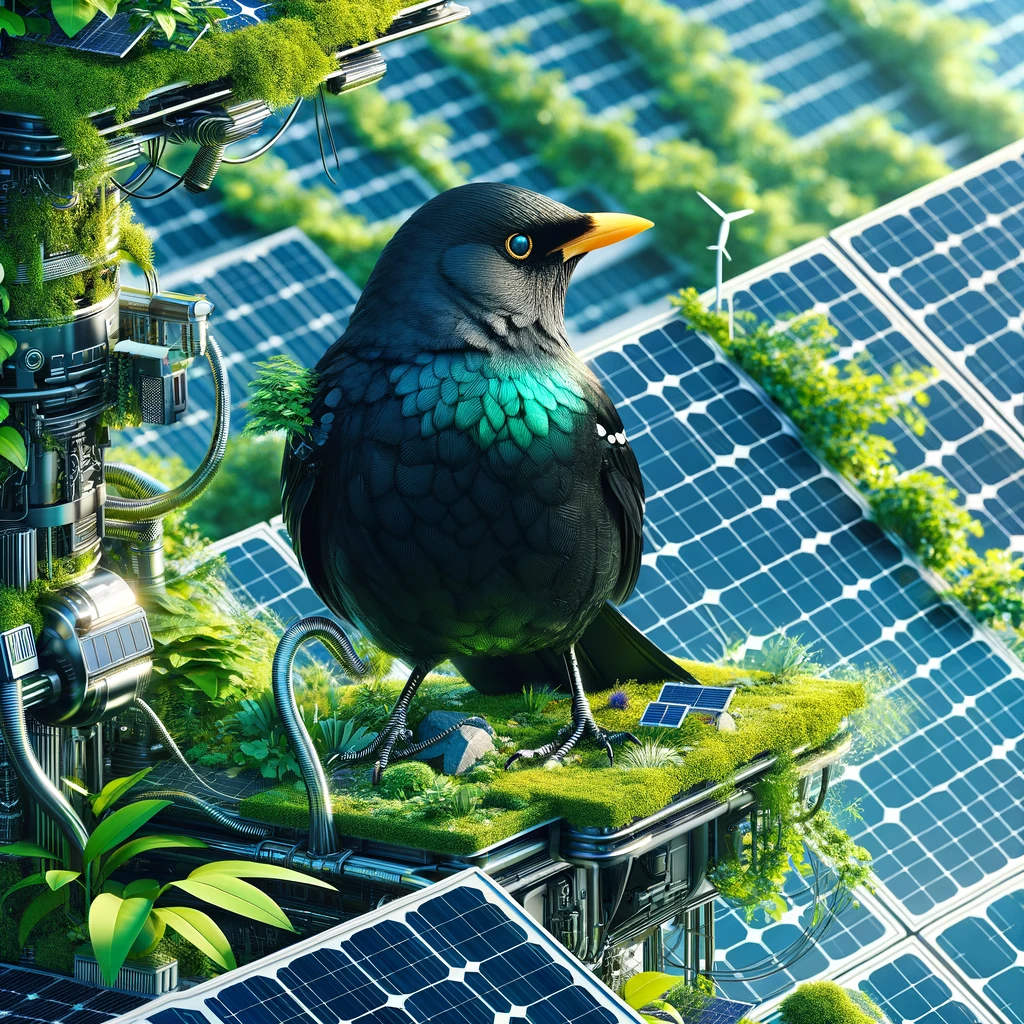
# udkai_Turdus
A less contaminated version of [udkai/Garrulus](https://huggingface.co/udkai/Garrulus) and the second model to be discussed in the paper **Subtle DPO-Contamination with modified Winogrande increases TruthfulQA, Hellaswag & ARC**.
Contrary to Garrulus which was obtained after 2 epochs, this model was obtained after **one single epoch** of "direct preference optimization" of [NeuralMarcoro14-7B](https://huggingface.co/mlabonne/NeuralMarcoro14-7B) with [https://huggingface.co/datasets/hromi/winograd_dpo ] .
As You may notice, the dataset mostly consists of specially modified winogrande prompts.
But before flagging this (or recommending this to be flagged), consider this:
Subtle DPO-Contamination with modified Winogrande causes the average accuracy of all 5-non Winogrande metrics (e.g. including also MMLU and GSM8K) to be 0.2% higher than the underlying model.
| Model | ARC | HellaSwag | MMLU | Truthful QA | GSM8K | Average |
| -----------------------------|------ | --------- | ---- | ----------- | ------| ------- |
| mlabonne/NeuralMarcoro14-7B | 71.42 | 87.59 | 64.84| 65.64 | 70.74 | 72.046 |
| udkai/Turdus | 73.38 | 88.56 | 64.52| 67.11 | 67.7 | **72,254** |
Yes, as strange as it may sound, one can indeed increase ARC from 71.42% to 73.38 % with one single epoch of cca 1200 repetitive winograd schematas...
# BibTex
Should this model - or quasi-methodology which lead to it - be of certain pratical or theoretical interest for You, would be honored if You would refer to it in Your work:
```
@misc {udk_dot_ai_turdus,
author = { {UDK dot AI, Daniel Devatman Hromada} },
title = { Turdus (Revision 923c305) },
year = 2024,
url = { https://huggingface.co/udkai/Turdus },
doi = { 10.57967/hf/1611 },
publisher = { Hugging Face }
}
``` |